Temple Architecture: North vs South India
Temple Architecture: North India vs South India
Hindu temples are not only places of worship. They are sacred spaces designed to connect human life with the Divine. Every part of a temple — from the entrance to the tower, from the inner sanctum to the carvings on the walls — carries spiritual meaning.
Across India, temple architecture developed in different styles based on region, climate, culture, materials, and royal patronage. Two of the most well-known styles are the North Indian Nagara style and the South Indian Dravidian style. Both styles are beautiful, sacred, and deeply connected to Hindu tradition, but they look very different.
The Purpose of Hindu Temple Architecture
A Hindu temple is designed as a spiritual representation of the universe. The central shrine, called the garbhagriha, means “womb chamber.” It is the most sacred part of the temple, where the deity is placed.
Devotees enter the temple, walk toward the deity, offer prayers, and experience a journey from the outside world toward inner peace and divine connection.
The temple is also seen as the body of the Divine. The tower above the sanctum represents the spiritual mountain, often connected with Mount Meru, the cosmic mountain in Hindu thought. The temple is therefore not just a building; it is a sacred symbol of God, creation, and spiritual elevation.
North Indian Temple Architecture: Nagara Style
North Indian temples are usually built in the Nagara style. This style is common in states such as Uttar Pradesh, Rajasthan, Madhya Pradesh, Odisha, Gujarat, Bihar, and parts of northern and central India.
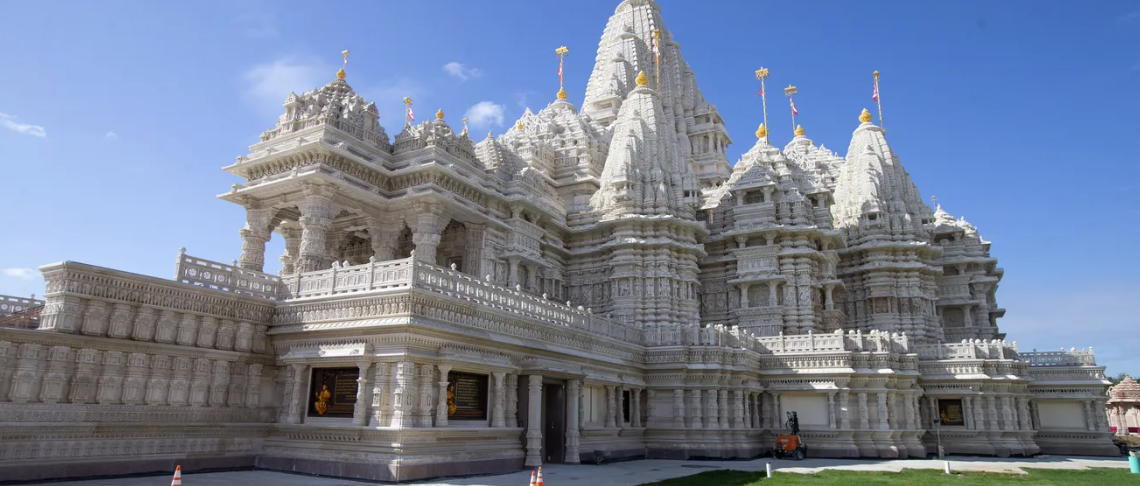
The most recognizable feature of a North Indian temple is the tall, curved tower above the sanctum. This tower is called the shikhara. It rises upward in a graceful, mountain-like shape, symbolizing the soul’s journey toward the Divine.
North Indian temples often have a smaller entrance compared to South Indian temples. Instead of very large gateway towers, the main visual focus is usually the shikhara above the deity’s shrine.
Important features of North Indian temples include:
Shikhara — the tall curved tower above the sanctum
Garbhagriha — the inner sanctum where the deity resides
Mandapa — a hall for devotees to gather and pray
Amalaka — a stone disk-like element near the top of the shikhara
Kalasha — a sacred pot-like finial at the top of the temple
Many North Indian temples are also known for detailed carvings of deities, celestial beings, animals, flowers, and stories from Hindu scriptures.
Famous examples of North Indian temple architecture include:
Kashi Vishwanath Temple in Varanasi
Kandariya Mahadeva Temple in Khajuraho
Jagannath Temple in Puri
Sun Temple in Konark
Somnath Temple in Gujarat
South Indian Temple Architecture: Dravidian Style
South Indian temples are usually built in the Dravidian style. This style is common in Tamil Nadu, Karnataka, Andhra Pradesh, Telangana, and Kerala, though Kerala temples also have their own distinct regional features.
The most recognizable feature of a South Indian temple is the huge gateway tower called a gopuram. These towers are often covered with colorful sculptures of gods, goddesses, saints, animals, and scenes from Hindu stories.
In many South Indian temples, the gopuram is taller and more visually dominant than the tower above the main sanctum. Large temple complexes may have several gopurams, courtyards, halls, water tanks, and shrines.
Important features of South Indian temples include:
Gopuram — the grand entrance tower
Vimana — the tower above the sanctum
Garbhagriha — the inner shrine of the deity
Mandapa — pillared halls for worship, music, dance, and gatherings
Prakara — enclosed temple walls and walking paths
Temple tank — sacred water tank used for rituals and festivals
South Indian temples are often large cultural centers. They are places for worship, festivals, classical music, dance, food distribution, education, and community life.
Famous examples of South Indian temple architecture include:
Meenakshi Amman Temple in Madurai
Brihadeeswarar Temple in Thanjavur
Sri Ranganathaswamy Temple in Srirangam
Virupaksha Temple in Hampi
Ramanathaswamy Temple in Rameswaram
Main Differences Between North and South Indian Temples
The biggest difference is the shape and focus of the temple towers.
In North India, the shikhara above the sanctum is usually the main architectural focus. It rises in a curved form and points upward toward the heavens.
In South India, the gopuram at the entrance is often the most dramatic feature. It is usually very tall, colorful, and filled with sculptures.
North Indian temples are often more vertical and compact in appearance. South Indian temples are often larger temple complexes with multiple courtyards, halls, gateways, and festival spaces.
North Indian temples usually emphasize the rising tower over the deity. South Indian temples often emphasize the journey through grand gateways before reaching the sanctum.
Similarities Between Both Styles
Although North and South Indian temples look different, their spiritual purpose is the same.
Both styles include:
A sacred inner sanctum
A deity worshipped with devotion
Rituals, prayers, and offerings
Symbolic connection between earth and heaven
Sculptures from Hindu scriptures
A space for community and spiritual learning
Both temple styles remind devotees that human life should move from the outside world toward inner devotion, purity, and God-realization.
Temple Architecture and Spiritual Meaning
Every Hindu temple teaches a spiritual lesson. The outer walls may show the beauty and complexity of life. The inner sanctum is simple, quiet, and sacred. This represents the journey of the soul.
Outside, life is full of noise, desire, duty, struggle, and movement. Inside, near the deity, there is peace, devotion, and divine presence.
This is why temple architecture is so powerful. It does not only show art and engineering. It guides the heart toward God.
Why This Matters for the Next Generation
For children and young people, learning about temple architecture helps them understand that Hinduism is not only about rituals. It is also about art, science, geometry, history, culture, music, sculpture, and spirituality.
A temple is a living classroom. It teaches devotion through prayer, culture through festivals, service through prasadam, and history through architecture.
When the next generation understands the meaning behind temple design, they feel more connected to Hindu dharma and more proud of their heritage.
Conclusion
North Indian and South Indian temples show two beautiful expressions of the same spiritual truth. The North Indian Nagara style rises through the graceful shikhara, while the South Indian Dravidian style welcomes devotees through majestic gopurams.
Both styles remind us that a Hindu temple is more than stone, sculpture, and architecture. It is a sacred bridge between human life and the Divine.
Whether in North India, South India, or anywhere in the world, the purpose of the temple remains the same: to bring people closer to God, dharma, devotion, and spiritual peace.


